
5 Ways to Make a Small Outdoor Space Feel Bigger
A small courtyard or balcony isn't a design limitation. It's a different design problem, and one with well-established solutions. Here's how we'd approach it at Artisan Exterior.
1. Divide Your Space Into Zones
Even a few square metres benefits from distinct zones - a dining spot, a lounging corner, a planting edge, rather than one undefined area. Connect the zones with a consistent hard-landscaping material (paving, stepping stones or gravel) so the eye reads them as one considered space rather than several competing ones.
2. Choose Plants That Suit the Scale
Pick plants proportional to the space, and favour anything that won't block light: a Japanese maple, patio roses, or a climbing vine trained vertically instead of sprawling horizontally. Pot-grown plants add flexibility to rearrange as the space evolves, and species like viburnum or hydrangea hold visual interest across seasons rather than peaking for one month a year.
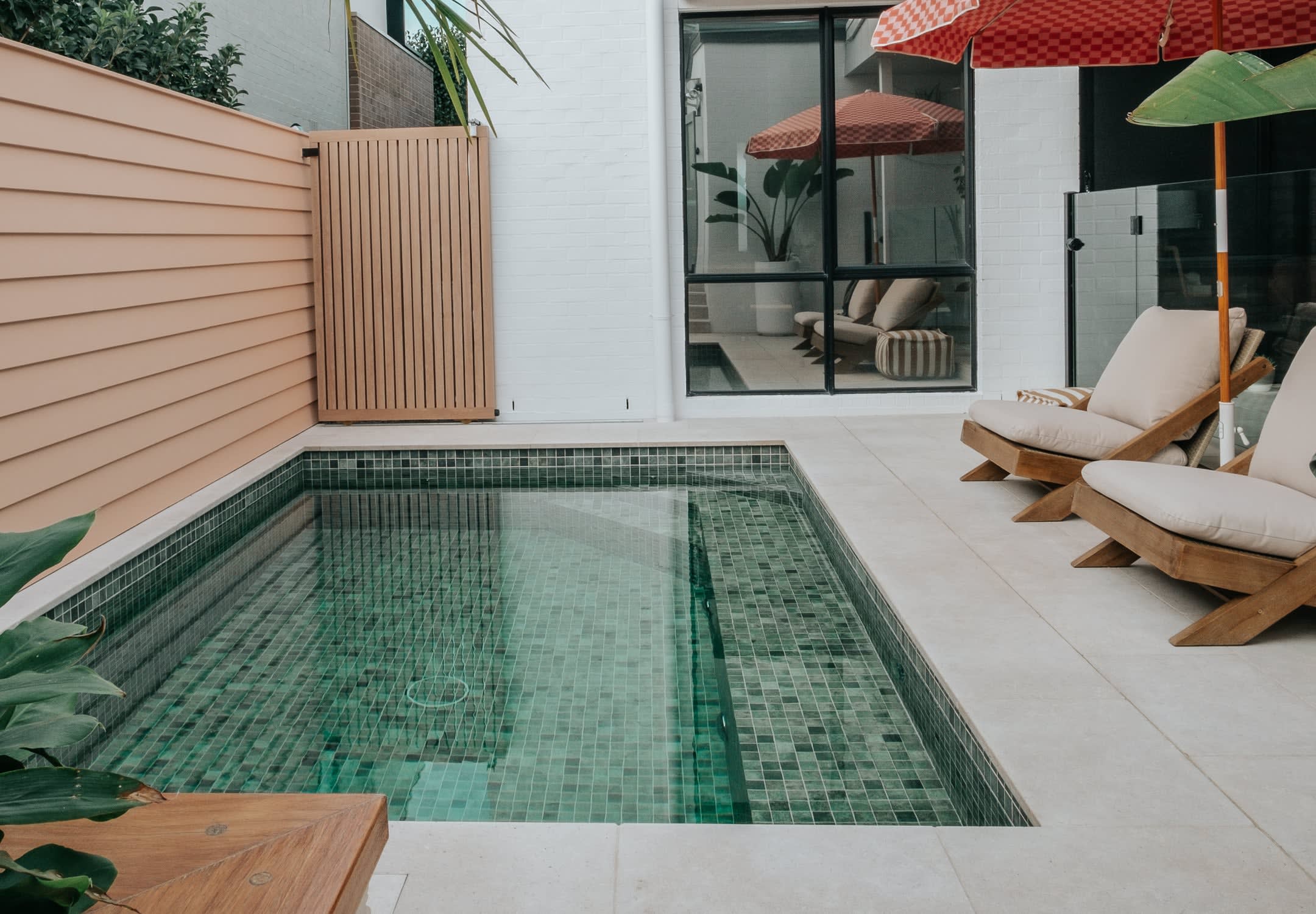
3. Pick Furniture That Doesn't Crowd the Space
Lightweight, collapsible or stackable pieces let a small space serve more than one purpose. Furniture with clean lines, a glass-topped table, open-backed or slatted chairs all read as less visually heavy than a solid, boxy equivalent, which matters more in a small footprint than a large one.
4. Create the Illusion of More Room
Long, continuous sightlines that draw the eye to a single focal point, a sculpture, a water feature, a feature wall. Make a space feel bigger than its actual dimensions. Fewer grout lines and joints in your flooring do real work here too: the same principle behind our large-format pool tiles applies just as well to paving underfoot, where a continuous surface reads as more spacious than a busy, small-format one. Vertical elements like climbing planting, a stone cladding feature wall all draw the eye upward and add a sense of height the flat plane alone can't.


5. Bring the Indoors Outdoors
Running the same flooring material from an internal room straight through to the courtyard, like what was done for The Fairview Project. Erases the visual break at the threshold and effectively doubles the perceived size of both spaces. Open doors, decking level with the internal floor, and an outdoor rug that echoes the indoor palette all reinforce the same trick.
Small Can be Beautiful
None of these ideas need a large budget or a large footprint. They need a considered plan. A well-zoned, well-planted, well-materialed small space reads as intentional rather than cramped, and that's the real goal.